Professional learning, tools, and expertise built for arts educators.
Asterine supports arts educators across their professional lives—from the classroom to coaching, leadership, and teacher preparation. Sightline, our lesson-analysis tool, offers one place to begin.
Sightline helps you examine a lesson you have already taught, using Learning Moves grounded in research on instructional design. You work through the lesson move by move, while your recording and transcript stay on your own computer.
1
Bring in a lesson
Start with a video, audio file, or transcript you already have. Transcription and speaker labelling run in your browser. Sightline does not record your lesson or access your microphone.
2
Code what you see
Work through the transcript and tag each moment with the Learning Move it shows. The definitions stay beside you while you work.
3
See the pattern
The whole-lesson view shows the Learning Moves across the lesson, so you can see what you lean on and what rarely appears. Counterpoint offers a second reading of the same moments to compare with your own.
Demo video goes here. Two minutes, one real lesson, coded start to finish.
The framework
Cognitive apprenticeship in the arts classroom.
Learning Moves
A shared vocabulary for looking closely at teaching and learning. The Learning Moves give teachers a consistent way to notice what is happening in a lesson, reflect on their choices, and talk about practice with others. The same language carries through Sightline, professional learning, and the conversations that follow.
Modeling
Teacher artfully demonstrates artistic materials and processes.
Scaffolding
Teacher provides supports in student learning.
Articulation
Students communicate their understanding.
Exploration
Students use artistic materials in new ways.
Coaching
Teacher provides customized feedback during learning.
Reflection
Students examine their process and product.
The Learning Moves are the instructional strategies of Cognitive Apprenticeship: Brown, J. S., Collins, A., & Duguid, P. (1989). Situated cognition and the culture of learning. Educational Researcher, 18(1), 32–42.
Who it's for
Four ways in.
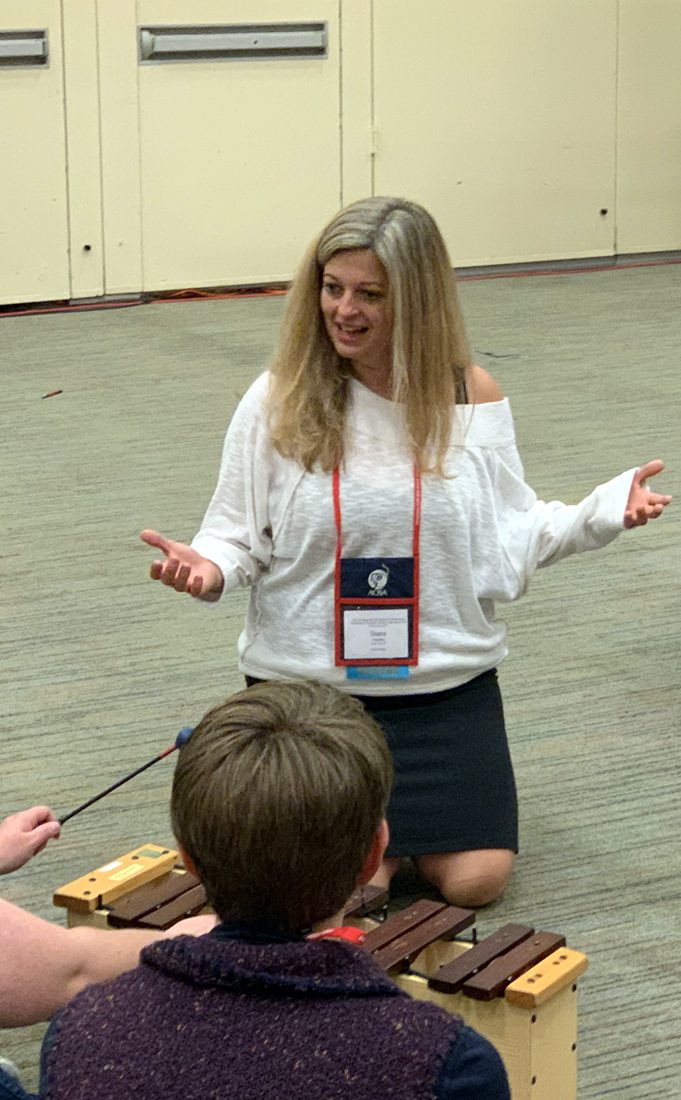
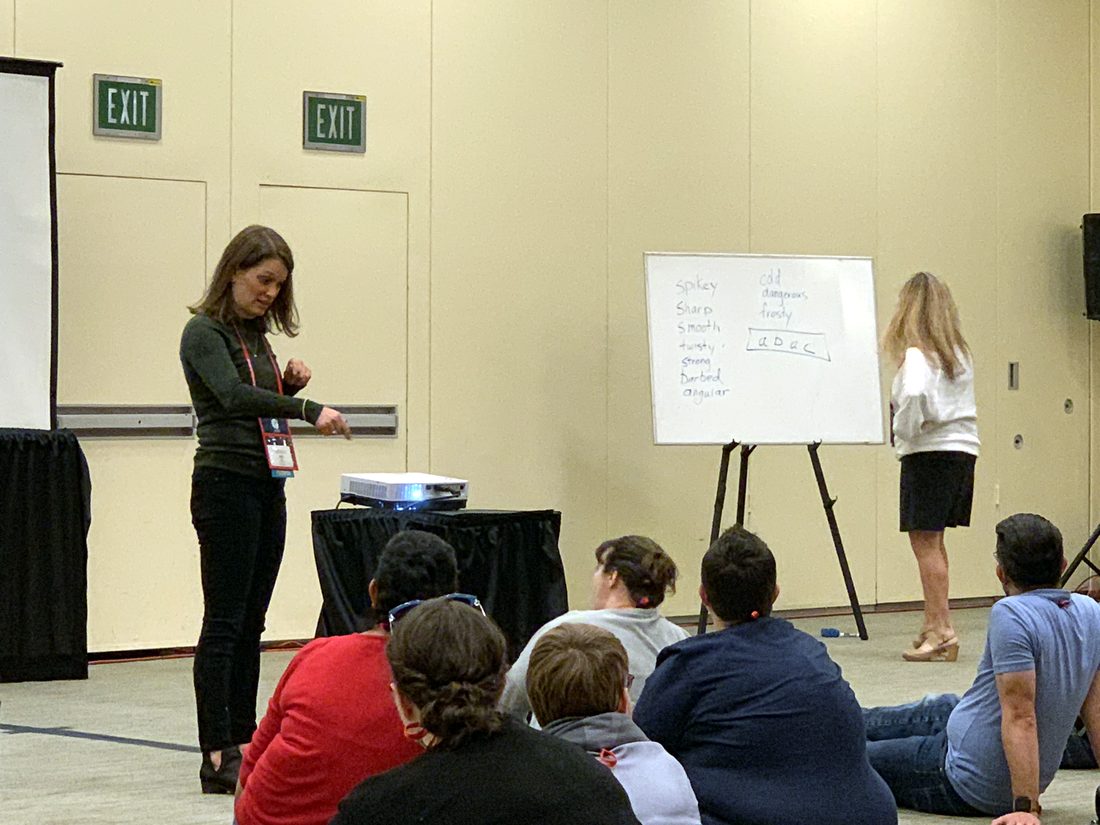
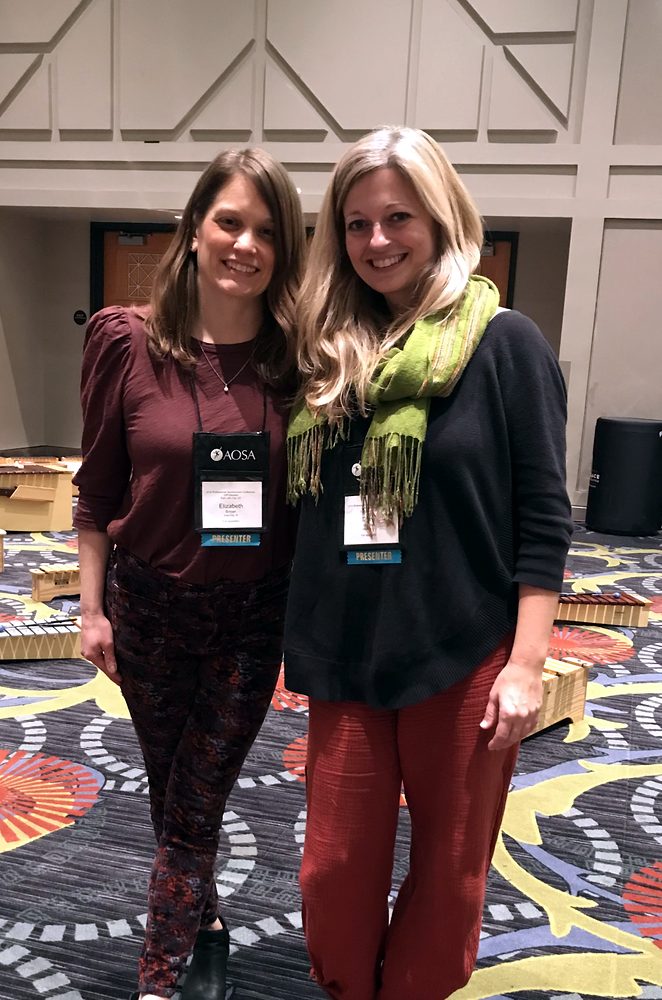
Teaching a session for music educators at a national Orff Schulwerk conference.
Arts teachers
You may be the only arts teacher in your building, without someone down the hall who teaches what you teach. Sightline gives you another way to look closely at your own practice: examine a lesson, compare your reading with Counterpoint, set goals, and use your own lesson data to see how your teaching changes over time.
A 90-minute session introduces the Learning Moves and Sightline to a team. Teachers code the same short lesson moments, compare what they see, and talk through their decisions. The process builds a shared language for teaching and gives departments or districts a framework they can continue using to reflect, set goals, and grow together.
Arts and related-arts educators benefit from professional learning that speaks directly to their disciplines. This gives teachers a clear focus for reflection and growth across the year, supported by evidence from their own practice. Lesson recordings remain on the teacher’s device.
Use Sightline in methods courses, student teaching, and supervision to make reflection on teaching more concrete. Candidates can examine their own lessons, identify Learning Moves, and bring the same lesson data into conversations with instructors or supervisors. Across multiple lessons, they can set goals and see how their practice develops over time. Faculty can use the same framework to create a shared language across coursework and field experiences, with a research-use option available for systematic study.
Transcription and analysis run in your browser. The audio and video are processed on your own machine, not on a server.
Recordings, transcripts, and codings are not uploaded. They stay in your browser's storage on that device until you delete them.
No student accounts, no student roster, and no student names are collected by Asterine.
During the private beta, the only information this site sends is the name and date of each tester who accepts the beta terms.
Your school or district decides how classroom recordings may be made, used, kept, and deleted under its own policies. We follow those requirements in every pilot.
Privacy documentation for a district review is available on request.
Two arts educators who kept asking the same question.
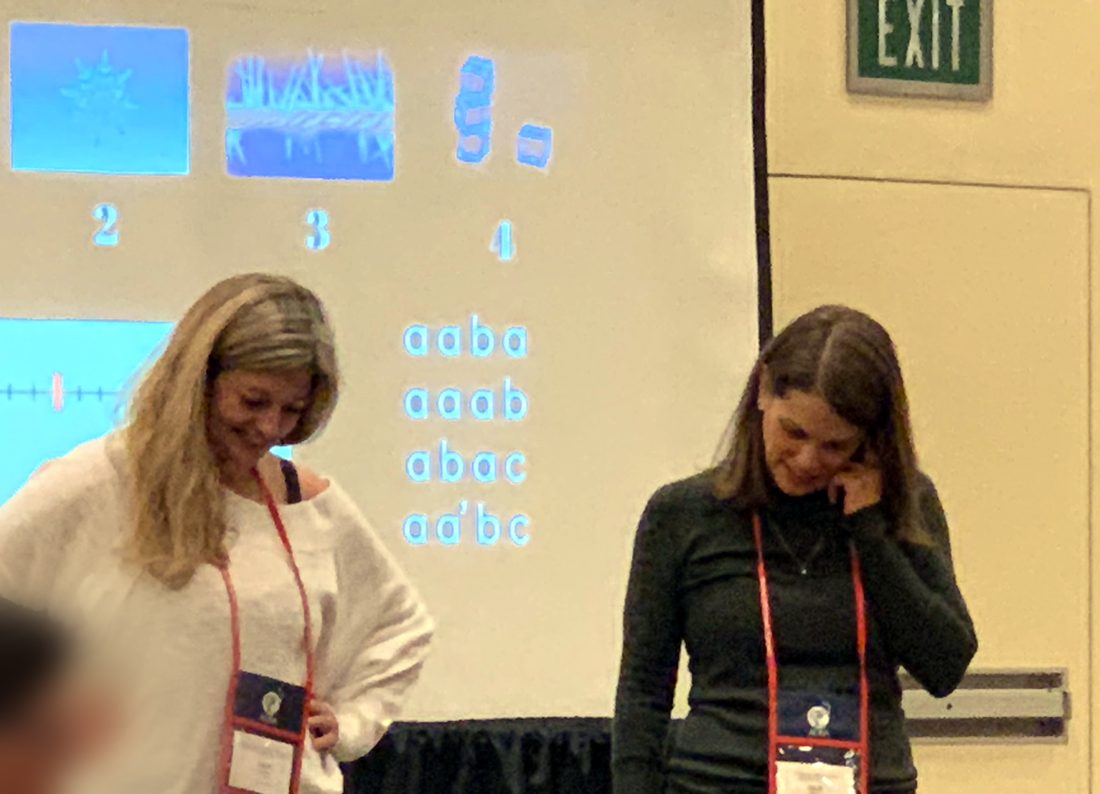
Teaching together.When we started our professional journey together.
Our mission is to sustain arts education by supporting the people who make it possible: the teachers in arts classrooms and the coaches, administrators, and teacher educators who support them. Making art is deeply human, embodied and shared, and a way communities come to know themselves.
Asterine works alongside teachers, schools, districts, and teacher-education programs to strengthen instruction, design arts programs, develop curriculum and assessment, and build classroom culture, within the time, budgets, and staffing schools actually have. Sightline is one part of that work.
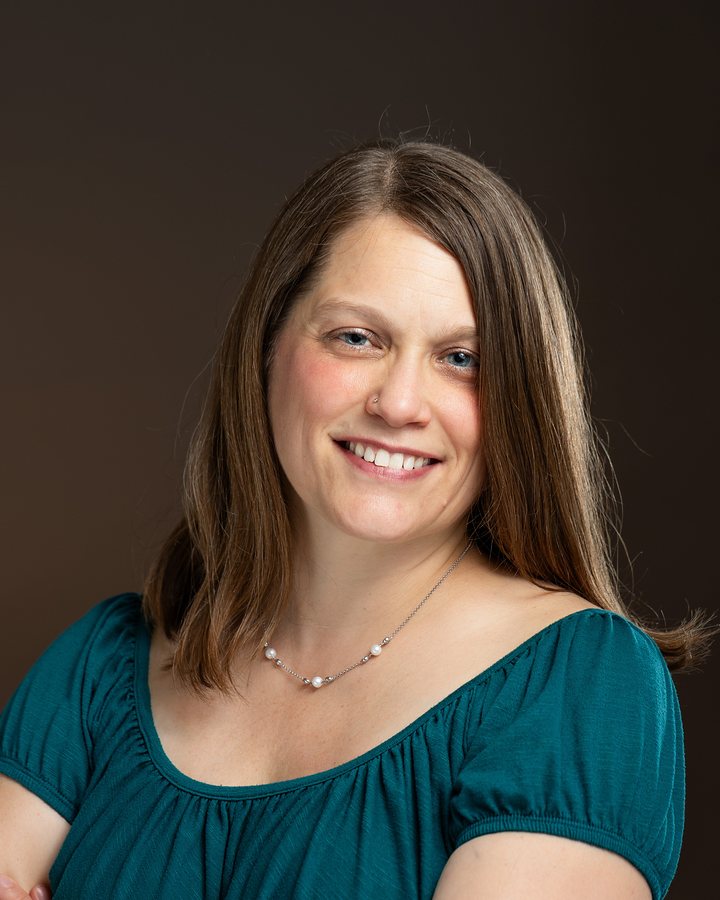
Dr. Elizabeth Brown
Twenty-five years teaching music in public schools, Academic Provost of a 6-12 performing and visual arts school, and an adjunct instructor in instructional design at the University of Iowa. PhD in educational psychology, with an emphasis in developmental science and statistics.
Dr. Diana Hawley
DMA. Decades in arts education as a teacher, clinician, and adjunct instructor across nine appointments, with a long record of presenting and workshop facilitation in music education.
The framework Sightline codes is our own, in print since 2020: Brown, B., & Hawley, D. (2020). Facilitating music making through cognitive apprenticeship in the Orff Schulwerk tradition. The Orff Echo, 52(2), 22-26.
What it costs
Licenses by teacher, school, district, or program. Professional development by the day.
We are setting the final structure now. Ask and we will send you current pricing and everything a school needs to make a decision.